Three ways to achieve rarity
A mineral can be rare in three ways: as a species (the mineral itself is extremely rare), as a find rarity (the deposit is exhausted or inaccessible – its specimens will never be "reproduced"), and as a quality rarity : the mineral is common, but almost never found in this perfect form. Most valuable collector's items belong to the third category.
Examples from our work
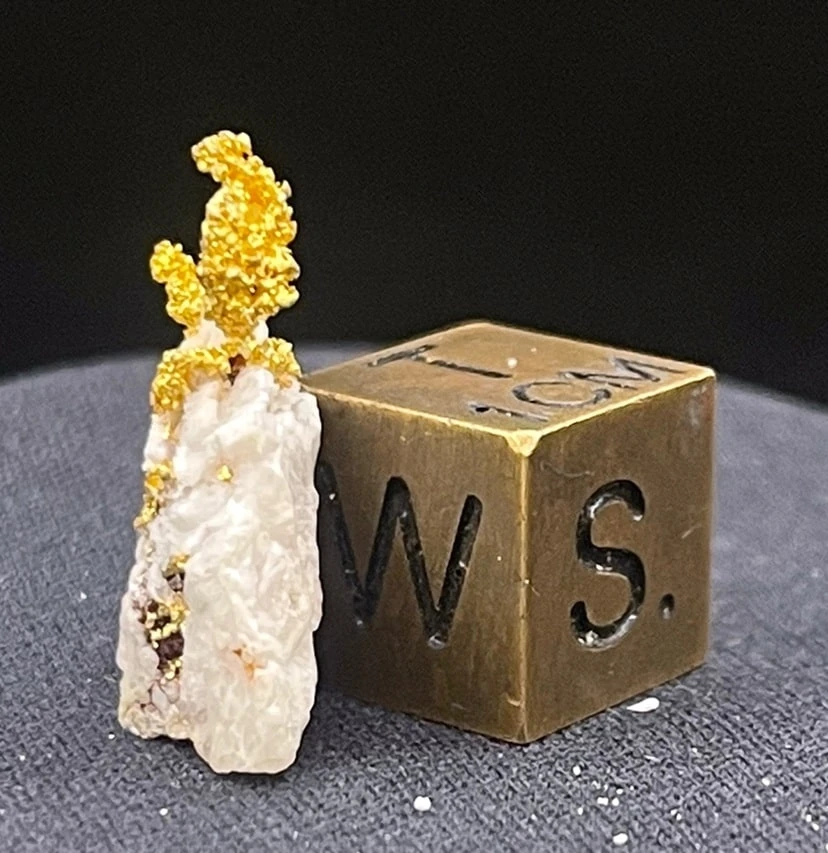
Gold on quartz is a prime example: gold itself is tradable like almost no other commodity – but naturally crystallized gold on host rock is a true rarity. The same applies to vanadinite: there are many hand specimens, but mineral specimens with flawless, deep red large crystals from mibladen are sought after and will remain so, because traditional mines will not produce indefinitely.
Responsible handling of rarities
True rarities deserve documentation (origin, old labels), careful storage, and, when sold, a buyer who understands their value. Be wary of inflated "rarity!" labels without justification – and if in doubt, ask: Why is this piece rare? A good dealer can answer that precisely. More on this in the article " The Rarest Minerals ."
Identifying rarities: the checklist
Five questions determine whether a specimen truly belongs to the category of rare minerals : Is the locality exhausted or still productive? Is the quality (crystal size, color, integrity) exceptional for the species? Is there a documented provenance with an old label or collection history? How many comparable specimens are on the market? And: Do independent sources – specialist literature, auction results, experienced dealers – confirm the assessment?
The more of these questions are answered positively, the more justified a premium price becomes. If the answers are missing, "rarity" is merely a marketing term.
Buy and preserve rarities
When buying minerals, always purchase rarities with complete documentation and keep it safe – labels, invoices, correspondence. For storage, individual boxes, stable bases, and a place out of direct sunlight are recommended. And insure significant pieces: a documented collection can be proven in case of damage, an undocumented one cannot. Practical tips on this can be found in the article " Organizing a Mineral Collection" .
We give priority to informing our regular customers when truly unique pieces arrive – such as exceptional gold on quartz or world-class vanadium from the current shipment. A brief inquiry is all it takes to be added to the list; of course, there's no obligation.
Frequently Asked Questions about Rarities
Does every old archaeological site automatically qualify as a rarity?
No. The crucial factor is the combination of an extinct source and actual demand: some depleted deposits have a plentiful supply of older specimens on the market, while others were never particularly sought after. Check both – availability and collector interest – before paying a premium for provenance.
How do I properly document a rarity?
Each item should have its own complete folder containing: proof of purchase, dealer's information on its provenance, old labels (never throw them away!), your own photos with scale and date, and notes on the collection's history. This documentation is worth real money when reselling – often more than the difference in condition.
Where are rare items even offered?
Rarely seen in open shop windows: The best pieces change hands through personal networks, advance information for regular customers, and specialized auctions. Access is gained through relationships with dealers who are at the source – which is precisely why it's worthwhile to register your wishes.
The most important points in brief
- Rarity arises in three ways: rare species , extinct fossil site , exceptional quality .
- A true rarity can be justified – with facts about the source, market situation and comparable items.
- Documentation and provenance are half the battle when it comes to preserving the value of rare items.
- Access is gained through dealer relationships: Create a wish list instead of hoping for chance finds.
Practical tip from M-Mineralien: Set up a "rarities fund"—a small, reserved portion of your annual budget that remains untouched until that one special piece turns up. Those who are liquid when others hesitate get the opportunities everyone else talks about later.
Finally, an observation from decades in the trade: Our customers' best rare finds were rarely the most spectacular deals, but rather the well-prepared ones. Those who know their collecting area, have comparable prices in mind, and can make quick decisions acquire the pieces that others are still considering. Buying rare items is a slow-motion knowledge advantage: The opportunity itself often lasts only days, but the preparation for it takes months. Therefore, invest in knowledge and connections – the pieces will then follow naturally, and at prices reserved for those who act swiftly.