A sea turned to stone
In the Paleozoic Era – long before the Sahara became a desert – a shallow, warm sea teeming with life covered large parts of what is now Morocco. Sea lilies swayed in colonies on the seabed, trilobites plowed through the sediment, and orthoceras cephalopods and later ammonites swam through the open water. Their calcium-rich remains were encased in fine sediments and, over millions of years, turned to stone.
The good news for today's collectors: the dry desert climate slowly erodes these layers, exposing them instead of destroying them. This means that in regions like Erfoud on the edge of the Sahara, world-class fossils from the Ordovician to the Cretaceous period are readily exposed.
The country's most famous fossils
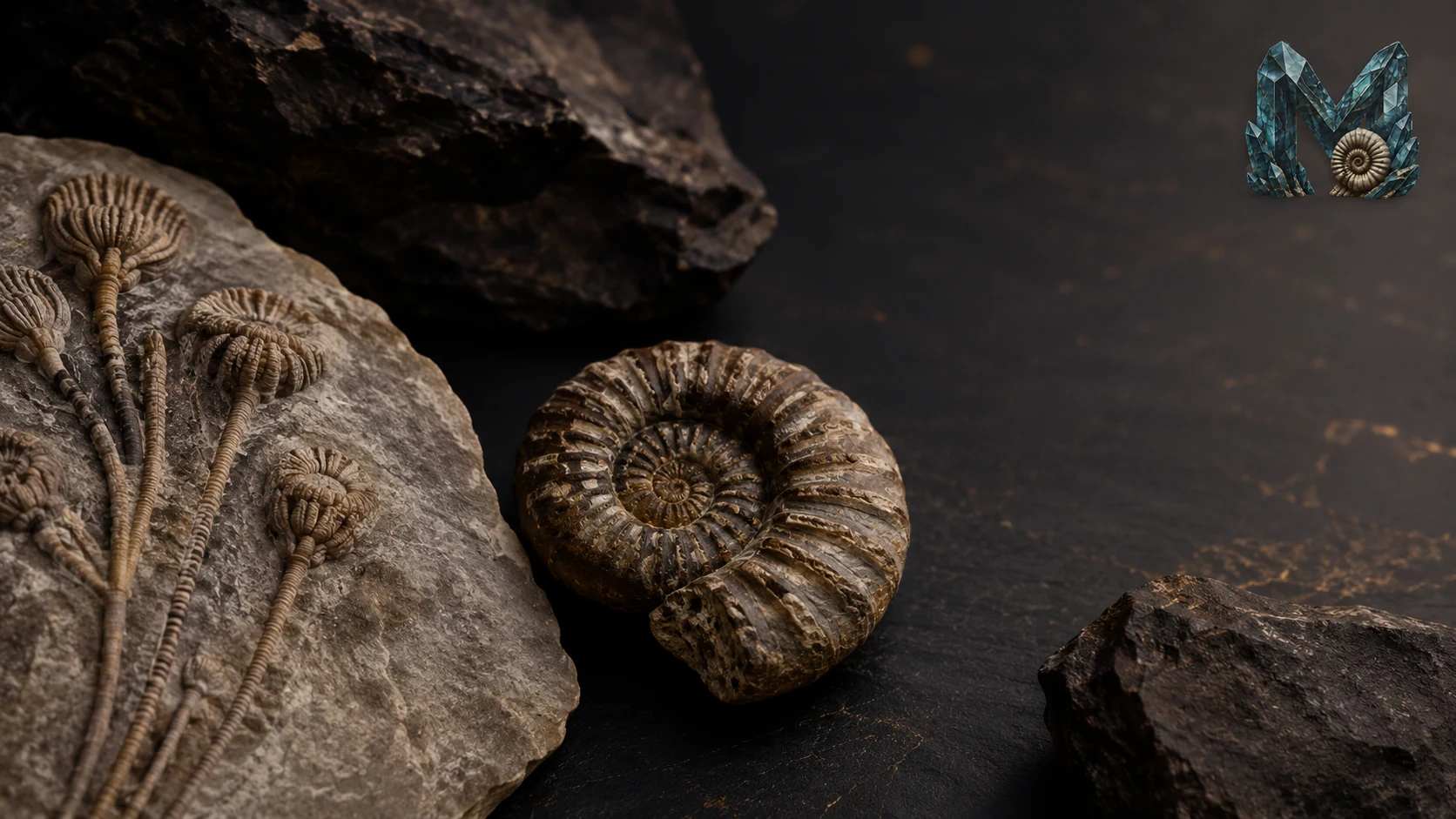
crinoids, or sea lilies, are paramount : entire colonies, fossilized with preserved stalks, calyxes, and arms, painstakingly excavated by Moroccan preparators over many months. Ammonites with their spiral shells, primitive trilobites, and the elongated orthoceras also contributed to the country's fame. Spectacular Cretaceous vertebrate fossils have also been found in Moroccan strata.
This diversity has an economic dimension: In regions like Erfoud, entire families live from the recovery and preparation of fossils. Their craft – refined over generations – is the reason why Moroccan pieces can be found in museums and collections worldwide today.
What buyers should pay attention to
Success has its downsides: alongside outstanding preparations, composite plates and, in the case of trilobites, even complete replicas are circulating. Therefore, buy from dealers who know their preparators, show photos of the back and details, and openly disclose any restorations. You can find our comprehensive buying guide on the page " Buying Fossils" .
And if you happen to be in Morocco: A visit to the fossil regions is well worth it. The combination of desert landscape, craftsmanship, and tangible geological history is unique – and explains why this work still fascinates us after decades.
Buy fossils from Morocco: Law and responsibility
Are fossils from Morocco even allowed to be traded? Yes – the commercial extraction and export of common collector fossils (crinoids, ammonites, trilobites, orthoceras) is an established, legal industry in Morocco, supporting entire regions. It's important to distinguish these from scientifically significant individual finds, which belong in museums and research institutions. Reputable dealers know this boundary and respect it – we include ourselves.
For buyers in Germany and the EU, this means: You are on the safe side when purchasing from established dealers with legal export rights. If in doubt, request an invoice specifying the type of product and its origin – this is standard practice for us.
Overview of famous archaeological sites
Besides Erfoud with its crinoid and orthoceras strata, the Devonian trilobite deposits around Alnif are world-renowned, as are the goniatite beds of the Maider Basin and the Cretaceous phosphates of Khouribga with their marine fauna. Each region has its specialty and preparation tradition – a network of family businesses that we have known personally for decades.
This proximity is crucial for quality and authenticity, as many replicas of trilobites are circulating. Our guide on recognizing fakes shows you what to specifically check ; you can find our current specimens via "Buy Fossils" – or contact us directly .
Frequently asked questions about fossils from Morocco
Am I allowed to bring back fossils from my holiday in Morocco?
Commonly traded fossils in typical quantities are generally unproblematic; export regulations apply to larger pieces and quantities. Keep your receipts! To be on the safe side, buy from established dealers with legal export procedures – then the paperwork is part of the service.
Are Moroccan fossils scientifically significant?
Some of the finds are world-class: Spectacular research discoveries from the Ordovician to the Cretaceous periods originate from Moroccan strata. The trade involves common collector types – reputable dealers report exceptional individual finds to the scientific community instead of selling them.
Which Moroccan fossil is suitable as a first piece?
A polished orthoceras or ammonite for a small price – or even a small crinoid slab: It combines aesthetics, age and history like no other entry-level fossil and remains a classic for our customers.
The most important points in brief
- Fossils from Morocco come from one of the richest fossil regions on Earth.
- Erfoud (Crinoids, Orthoceras), Alnif (Trilobites) and the phosphates of Khouribga are the most famous regions.
- The trade is legal and supports entire families – quality is ensured through personal on-site inspection.
- Beware of trilobites: replicas are common; origin and dealer are crucial.
Practical tip from M-Mineralien: When buying Moroccan slabs, pay attention to the back: A natural, ingrown rock surface indicates authenticity, while extensively filled backs warrant further investigation. We photograph both sides without being asked – insist on this everywhere else.