Buy crinoids – fascinating marine creatures of prehistoric times
Sea lilies, also known as crinoids, are among the most aesthetically pleasing fossils of all – fascinating marine creatures of prehistoric times: delicate, flower-like animals that populated the seas hundreds of millions of years ago – and today stand as stony works of art in collections and museums. We offer museum-quality prepared crinoid slabs directly from Morocco.
On this page we explain what makes crinoids so special, how you can recognize quality and how you can purchase a plate from us without a shop, with personal advice – including honest descriptions, real photos and personal consultation.
What are crinoids?
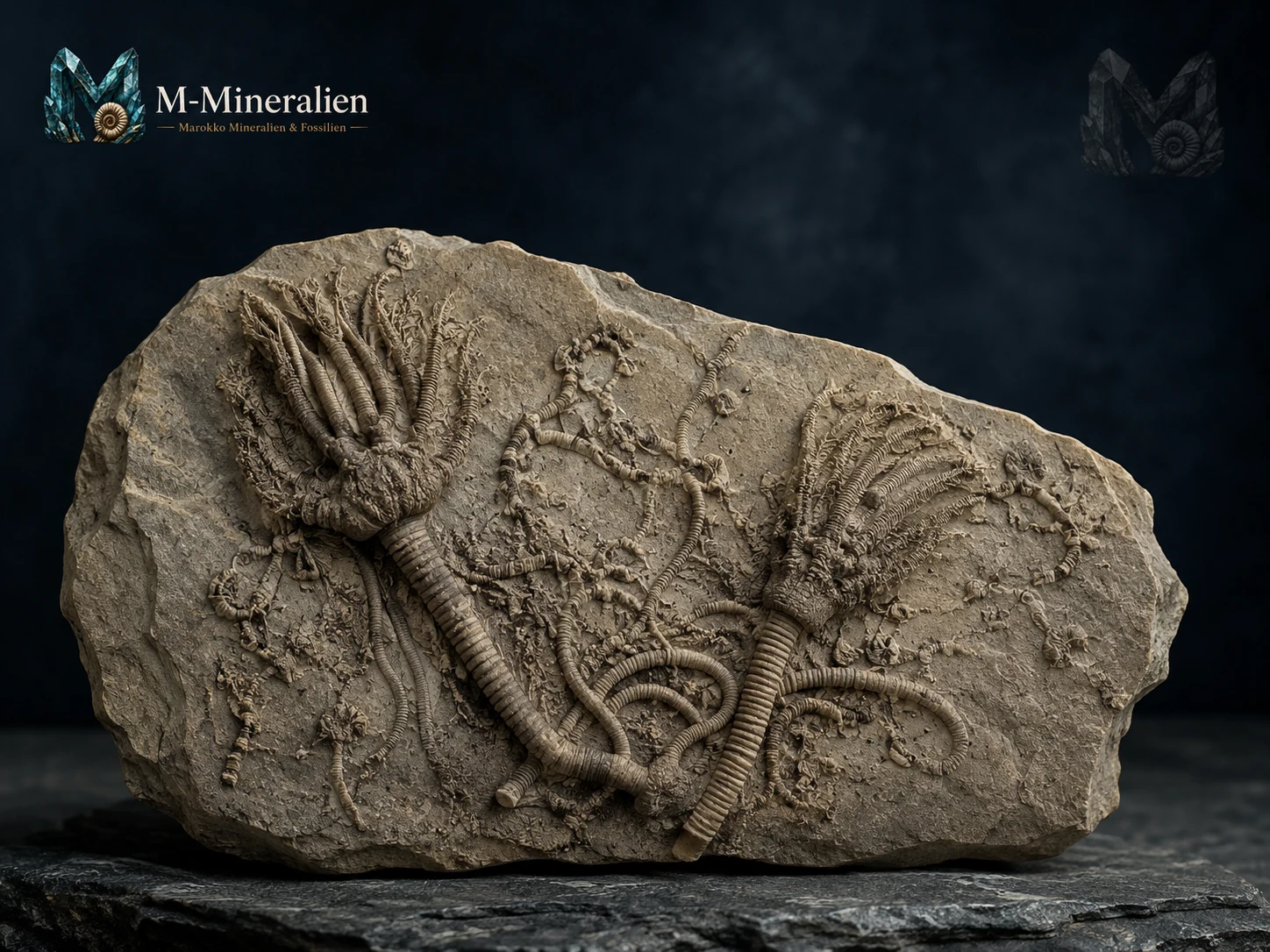
Despite their plant-like appearance, sea lilies are animals: they belong to the echinoderms and are related to starfish and sea urchins. Their body consists of a long, segmented stem, a calyx, and finely branched tentacles with which they filter plankton from the water.
Crinoids reached their peak in the Paleozoic era – entire seabeds were covered in sea lily forests. If a colony was buried by sediment, the fragile animals sometimes remained completely intact: stem, calyx, and arms, fossilized for eternity.
It is precisely these completely preserved colonies that make Moroccan crinoid plates so sought after: they show not individual parts, but entire snapshots of an ecosystem that is over 400 million years old.
Why buy crinoids?
A good crinoid slab is both natural history and a work of art. Collectors appreciate its scientific significance and the rarity of complete specimens; interior designers and museums value the graphic effect of the delicate structures on the natural stone slab – hardly any fossil looks so impressive on the wall.
In addition, there is the value component: High-quality prepared plates with multiple complete crowns have been in consistently high demand for years. The quality of preservation and preparation is always crucial – not just the size.
also have a firm place as fossil gifts for special occasions: a genuine piece of Earth's history that is exactly unique.
Origin: Erfoud and southeastern Morocco
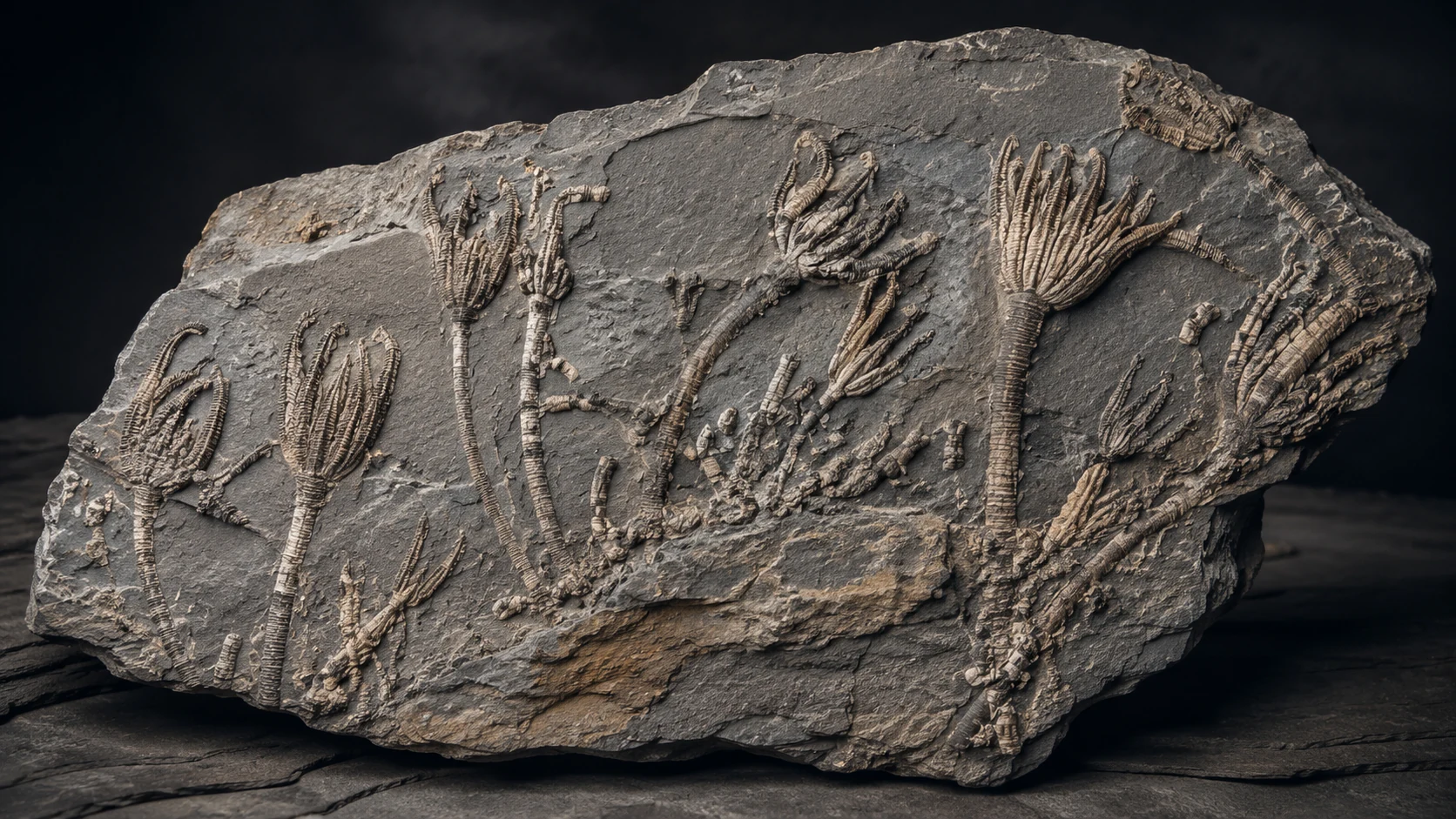
Our slabs originate predominantly from the famous fossil-bearing strata around Erfoud on the edge of the Sahara. The region is one of the most important fossil sites in the world: In the Paleozoic Era, a shallow, life-rich sea covered this area, the deposits of which are now exposed in the desert.
The geological period depends on the location and the specific stratigraphic layer. The known Scyphocrinites slabs from the Erfoud region are assigned to the Late Silurian to Early Devonian; they are not universally Ordovician. The exposure of the fine structures is carried out meticulously by hand. A more detailed classification can be found in the publication on Scyphocrinitids from Morocco .
Rudi and Salim Wald know the sites and workshops personally. We only select slabs whose preservation and preparation convince us – and we openly describe every addition.
Recognizing quality and authenticity
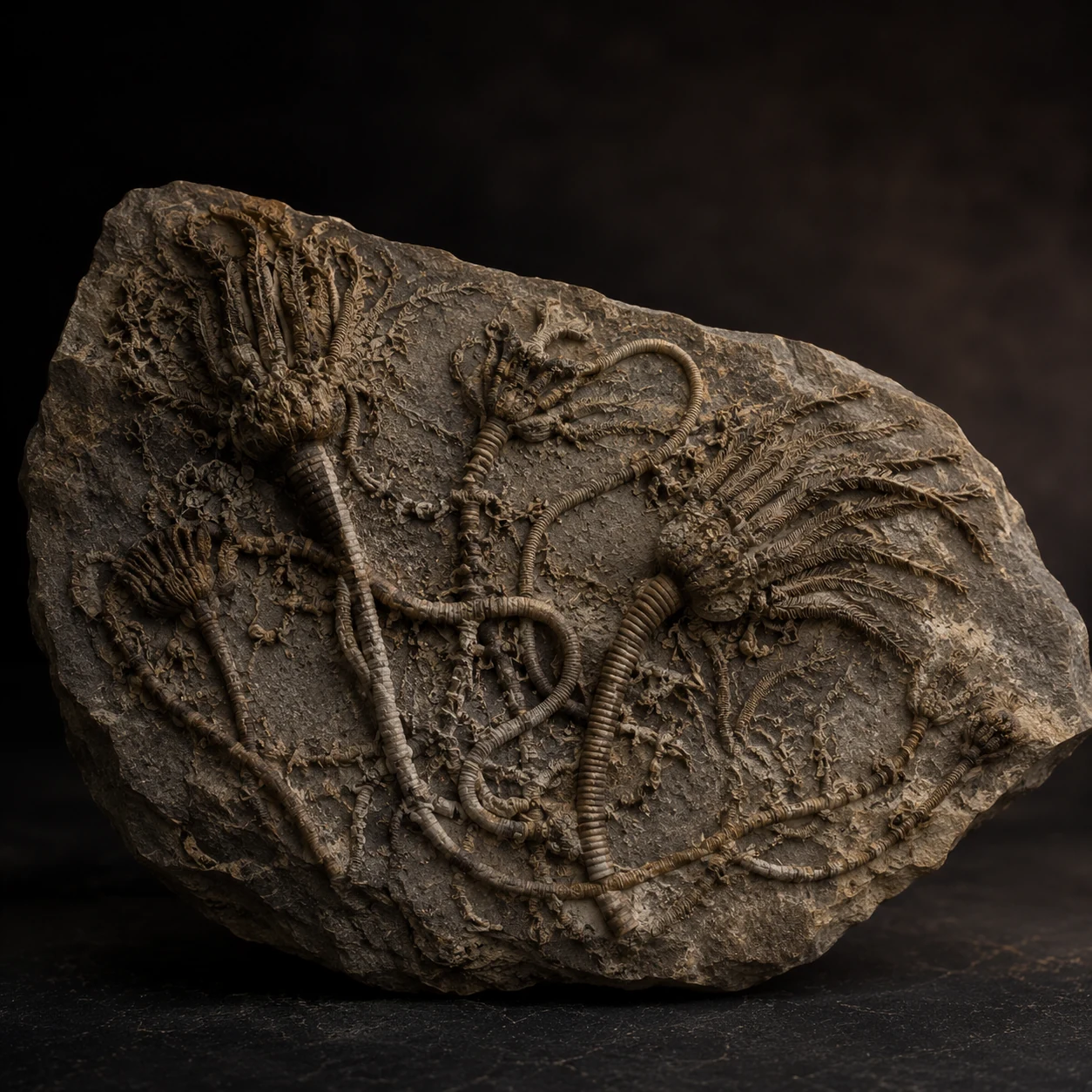
Crucial features include complete crowns with delicate arms, a cleanly carved relief, and a harmonious overall composition. Caution is advised with arrangements that appear too perfect: Composite slabs are circulating on the market where individual fossils have been embedded in other rocks.
Reputable dealers will disclose any restorations, additions, and repairs themselves. Upon request, we will show you detailed photos and back views of each record and describe its condition as we ourselves assess it – honestly and transparently.
Sizes, formats and presentation
From hand specimens with a single crown to large-format wall panels displaying entire colonies: crinoids come in many sizes. Smaller panels look stunning on a stand in a display case, while larger specimens make a striking statement when displayed freely on the wall – a natural painting in stone.
Simply tell us where the piece should stand or hang and what your budget is – we will suggest suitable panels from our current stock, including dimensions, weight and shipping costs.
Excerpt from our crinoid collection
Genuine photographs, each plate unique – this is just a selection. More pieces are constantly being added; ask for the current catalog with dimensions and prices.
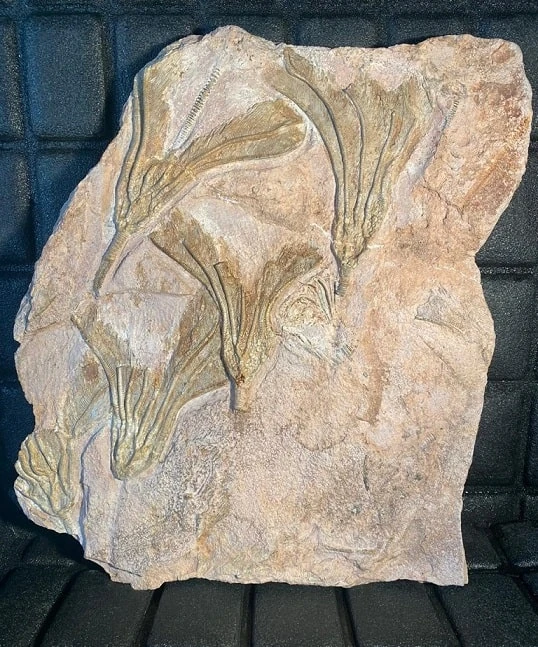
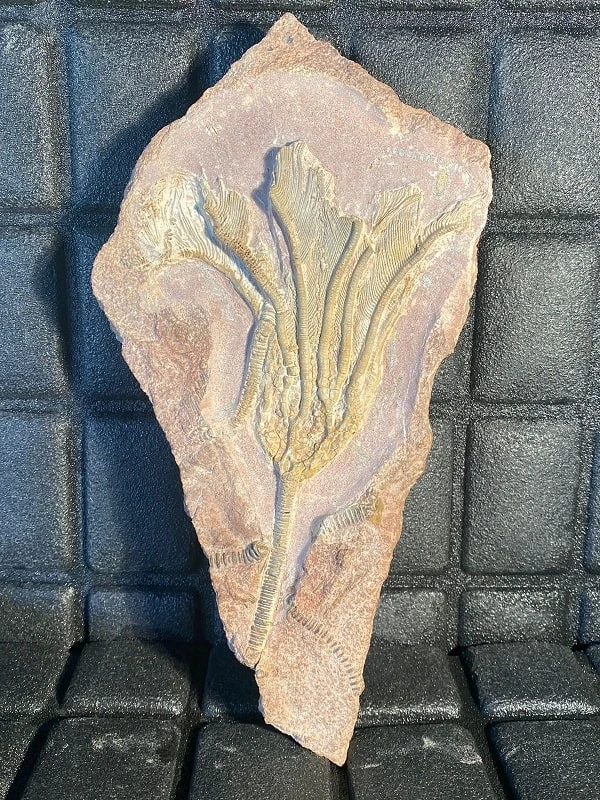
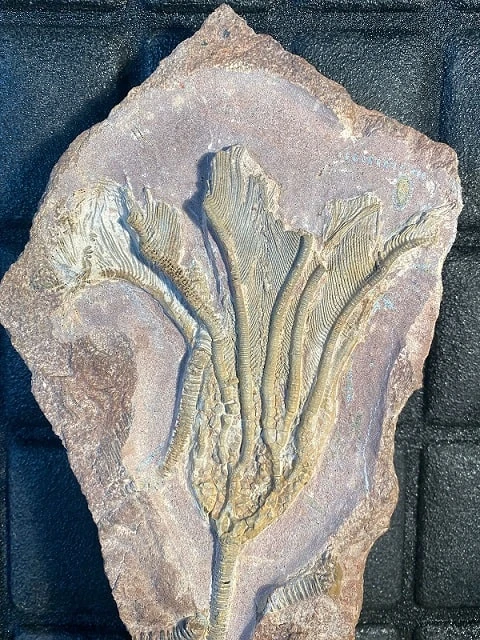
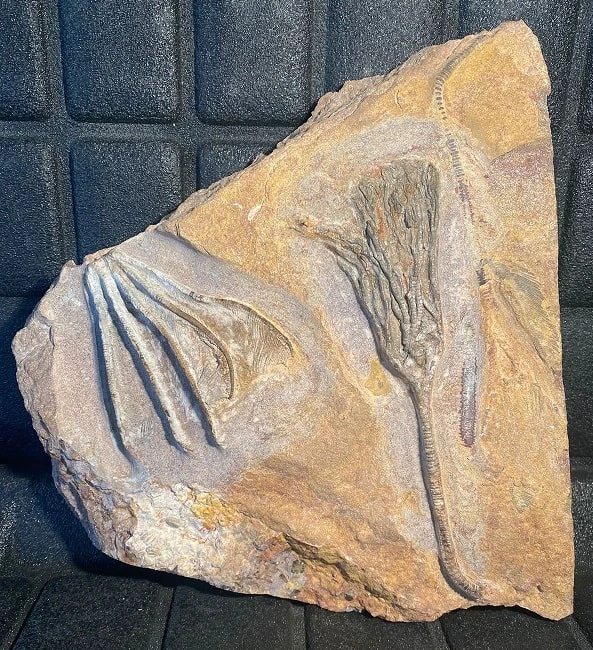

Frequently Asked Questions about Crinoids
Are crinoids plants or animals?
Despite their flower-like appearance, crinoids are animals: they belong to the echinoderms and are related to starfish and sea urchins.
Where did your crinoid plates come from?
Mostly from the known strata around Erfoud in southeastern Morocco, exposed by experienced local preparators.
How can I recognize a good record?
Complete crowns with delicate arms, cleanly crafted relief, harmonious composition – and a supplier who openly discloses additions and restorations.
How do I buy without a shop?
Upon request : You will receive photos, dimensions, and prices of the available slabs and can decide at your leisure. Shipping is secure and insured.
Request crinoid offer
Write to us and tell us which format you are looking for – you will receive photos, dimensions and prices of the currently available slabs, personally from Rudi or Salim Wald.