What drives the value of minerals
High-quality mineral specimens are real, rare objects – their market value is derived from quality, rarity, aesthetics, provenance, and demand from the collector community. For outstanding, well-documented pieces from known localities, a stable international market has existed for decades.
The risks were honestly identified.
Minerals are a niche market : there's no stock exchange, no guaranteed prices, and liquidity is limited – selling takes time and finding the right buyer. Fashions change, defects disproportionately reduce value, and those who buy poorly end up paying twice. Therefore, it's safe to say: appreciation in value is possible , but never guaranteed. You should be generally wary of providers who promise fixed returns.
Our recommendation: Joy first
Buy pieces that inspire you – in the best quality your budget allows, with clear documentation of their provenance. Then you'll own something lasting that brings joy, independent of market cycles – and ideally, retains its value. You can read about how to recognize quality under " Buying Minerals"; the section on "Rare Minerals" describes how to handle special pieces.
If anything, this is how experienced buyers proceed.
Those who still want to consider minerals as an investment should follow the rules of experienced collectors: buy only top quality from known localities (the mid-range market is large, the quality market small), document the provenance completely, archive purchase receipts – and be prepared to invest time: collectibles are not a daily purchase, but are held for years. Diversification also applies here: five very good pieces of different types are better than a single prestige object.
The cost calculation should also remain realistic: insurance, secure storage, and sales fees (stock exchange fees, auction house fees, dealer margin) reduce any increase in value. Those who factor these in will make a more objective judgment.
An honest comparison with other tangible assets
Unlike gold in bar form, minerals lack a daily market price; unlike art, they are very similar: their value depends on expertise, condition, provenance, and the right buyer. This isn't a disadvantage, but rather a different asset class – illiquid, requiring extensive consultation, but with one unbeatable advantage: you can enjoy them every day, regardless of their market value. No savings account shines in a display case.
Our stance as dealers has remained the same for decades: We sell collectibles, not promises of returns. What we can guarantee is authenticity, honest descriptions, and fair purchase prices through direct sourcing – the best foundation should a piece ever be resold. Further reading: Valuable Mineral Collections and The Role of Mineral Dealers .
Frequently asked questions about minerals as an investment
Which minerals, based on experience, retain their value best?
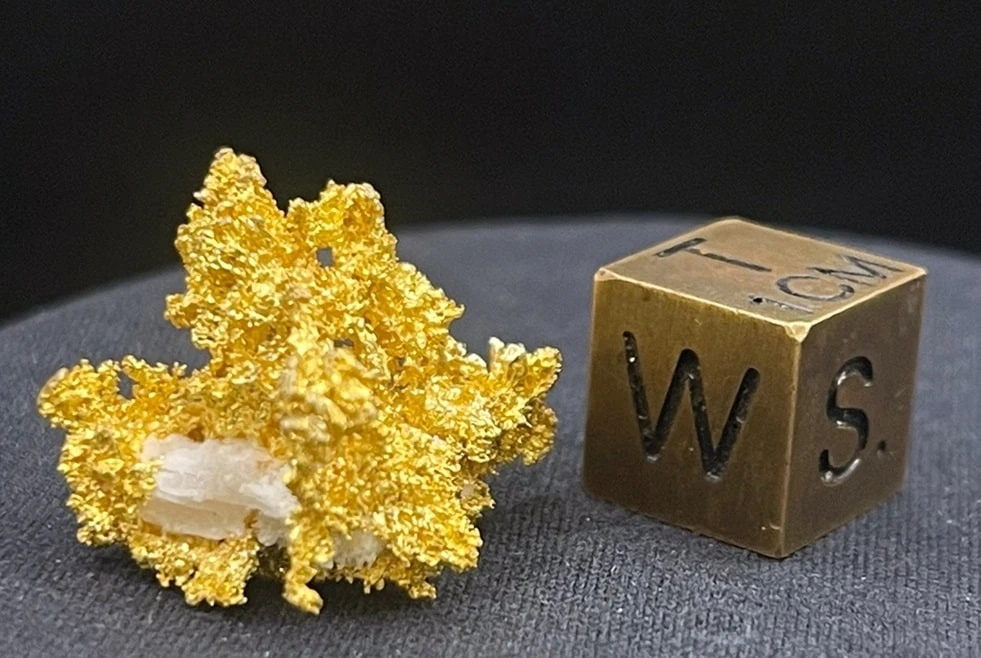
Documented top quality in classic collecting areas: flawless mineral specimens from famous localities, natural gold crystallizations, first-class fossil slabs. In short: pieces for which collectors worldwide compete. Average items of every kind are plentiful and will remain so – they rarely appreciate in value.
How quickly can a mineral collection be sold?
Realistically speaking, in months, not days: Selling top-quality items individually through dealers, exchanges, or auctions yields the best returns, but requires time and connections. Quick sales as a whole regularly cost 50 percent or more of the achievable value – the biggest practical risk of this "asset class".
Are there certificates like for gemstones?
There is no standardized certification system for collectible minerals. The "documents" here are provenance and dealer reputation: information on origin, purchase receipt, old labels, photos. Those who maintain this documentation have the strongest argument when reselling.
The most important points in brief
- Minerals are collector's items : real rarity, but no stock market, no guarantees.
- Value potential lies almost exclusively in documented top quality – not quantity.
- Additional costs (insurance, sales) and illiquidity belong in every honest calculation.
- Buy for enjoyment and with a focus on quality – then value appreciation can be a bonus, never the basis.
Practical tip from M-Mineralien: If you're considering the investment aspect, buy counter-cyclically to current trends: Color and aesthetics are in demand today – classic, scientifically interesting pieces with first-class provenance are often undervalued. That's precisely where the patient collector will find the best opportunities.
To sum it up: Treat minerals like a library of valuable first editions – you buy them because you love and understand them; that some increase in value is gratifying, but never the reason. This approach protects against disappointment, but paradoxically also leads to the best "returns": Because those who buy out of connoisseurship choose precisely the documented quality that the market rewards in the long run. Experience shows that the worst purchases are made by those who look at the money first – they lack the compass that only genuine collector interest provides.