
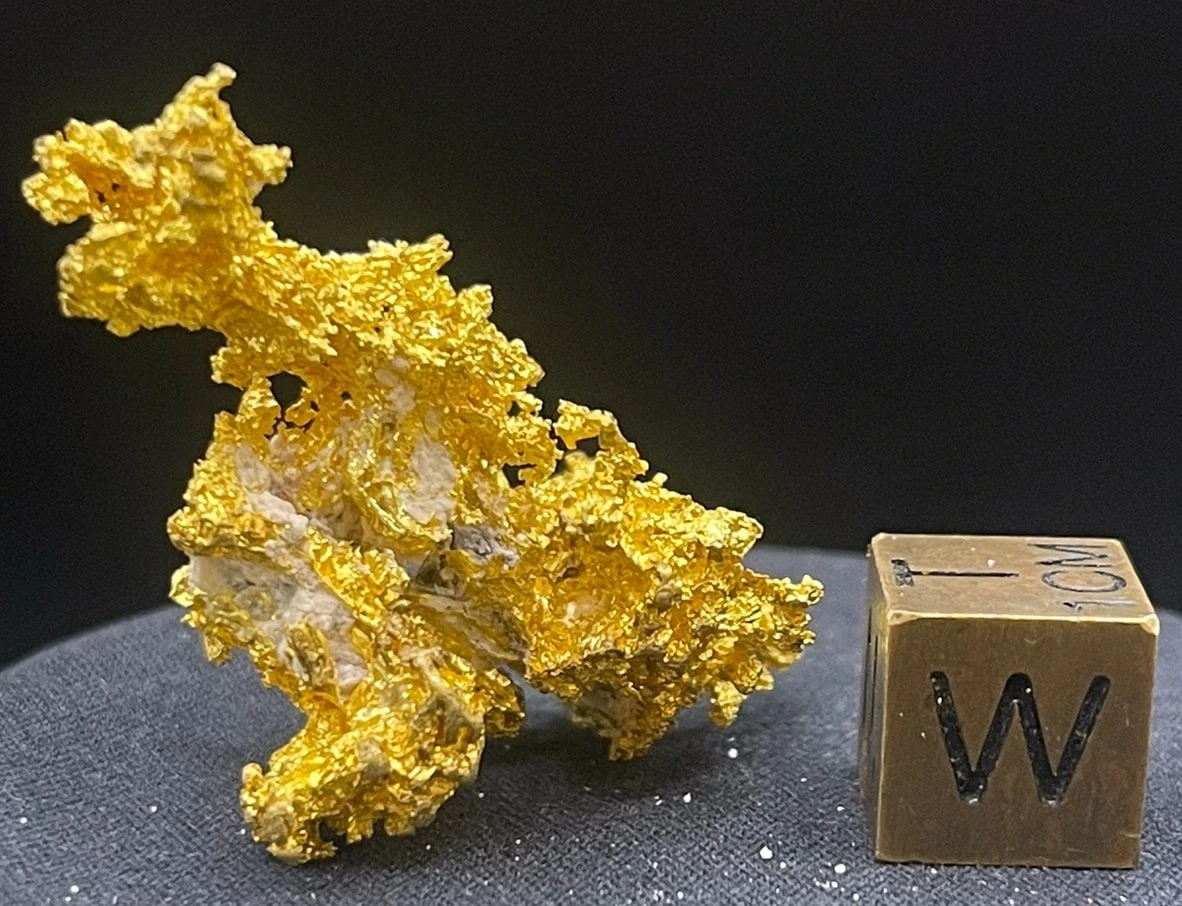
Elements: Minerals in their purest form
The system begins with the native elements : gold, silver, copper, sulfur, graphite, and diamond. They occur as pure substances – naturally crystallized gold is probably the most sought-after example of this class.
Sulphides, oxides, halides, carbonates
Sulfides like pyrite and galena are the major ore-forming minerals. Oxides range from hematite to corundum (ruby/sapphire). Among the halides is the colorful fluorite, while the carbonates include calcite, aragonite, and the copper beauties azurite and malachite – Morocco's azurite is world-famous. Sulfates (barite, gypsum) and phosphates/vanadates also exist – our vanadinite , chemically a lead vanadate, belongs to this group.
Silicates: the largest class
Approximately 90% of the Earth's crust consists of silicates : quartz, feldspar, mica, tourmaline, garnet, and thousands more. For collectors, the classification primarily serves as a guide – ultimately, what inspires them is what they collect. The article "The Most Common Minerals" provides an introduction to the most frequent representatives.
How minerals are identified
Classification is the final step in the identification process. Before that, the classic characteristics are considered: hardness (Mohs scale 1–10, testable with a fingernail, copper coin, or steel), streak color (powder color on unglazed porcelain – yellowish for vanadinite, for example), luster (metallic, vitreous, greasy, diamond-like), cleavage , and density . With these five criteria, plus crystal form, most collectible minerals can be reliably identified – entirely without a laboratory.
A small identification kit is worthwhile for collectors: hardness plates, a porcelain plate, and a magnifying glass. It turns every new acquisition into a small research project – and also protects against incorrect purchases.
Why the class determines how people interact
The classification system also serves as a care guide: Carbonates like azurite or calcite cannot tolerate acids and often not bright light; sulfates like gypsum are extremely soft; some sulfides (e.g., marcasite) can decompose in humid air; halides like rock salt simply dissolve when washed. Knowing the classification of your mineral ensures correct storage and cleaning – we provide details for each piece with every purchase.
Deepen your practical experience in organizing a collection – or start your systematic collection right away with Moroccan representatives of the most important classes: just ask .
Frequently asked questions about mineral classification
How many types of minerals are there currently?
Over 5,000 recognized species exist, with several dozen newly described ones added each year. Of these, perhaps 300 are relevant to collectors – the rest exist primarily as microscopic grains in specialized laboratories.
Do I, as a collector, need to know the classification system by heart?
No – but knowing the basic classes is worthwhile: they reveal care requirements (carbonates: acid-sensitive!), explain relationships, and make stock market discussions more productive. An evening of reading is sufficient for the collector level.
To which class do the Moroccan classics belong?
Vanadinite is a vanadate (phosphate class), azurite and malachite are carbonates, barite is a sulfate, quartz is an oxide in a broader sense – and crystallized gold belongs to the native elements. One country, five classes: ideal for beginners in systematics.
The most important points in brief
- Ten basic classes categorize over 5,000 types – from elements to silicates.
- The class reveals the care requirements : acid, light, and water sensitivity are class characteristics.
- Determination is achieved using five criteria: hardness, streak color, luster, cleavage, density.
- Morocco covers five classes of collector quality – perfect for getting started with systematic collecting.
Practical tip from M-Mineralien: Start a "class collection": one good Moroccan specimen per mineral class. Ten mineral specimens, maximum learning effect, a clear shopping list – and in the end, you'll have a small collection that tells you more about mineralogy than many a picture book.
Finally, the practical benefit in everyday life: The systematic approach makes you independent of sellers' claims. Anyone who knows that "blue quartz" is often dyed, that carbonates react to acid, and that genuine gold is never magnetic can verify offers themselves in minutes. A small identification guide next to the display case—and every coin fair becomes an open examination with you as the examiner. It is precisely this fundamental knowledge that ultimately distinguishes the discerning collector from the casual buyer: It costs one winter evening of reading and pays off for a lifetime of collecting.
How deeply you delve into the classification system is a matter of personal preference – but one effect is universal: order in your mind creates order in your display case. Many collectors report that after studying the classifications, they regrouped their holdings – carbonates with carbonates, elements given pride of place – and that the collection became "readable" for the first time, both for guests and themselves. Try it: even rearranging a single shelf according to classification changes your perspective on your treasures.